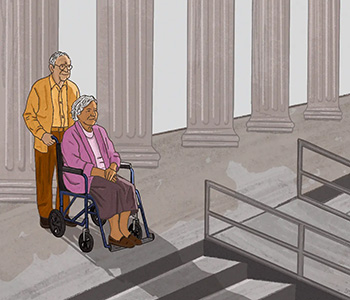
In her house in Ypsilanti, Mich., Barbara Meade said, “there are walkers and wheelchairs and oxygen and cannulas all over the place.” Ms. Meade, 82, has chronic obstructive pulmonary disease, so a portable oxygen tank accompanies her everywhere. Spinal stenosis limits her mobility, necessitating the walkers and wheelchairs and considerable help from her husband, Dennis Meade, who serves as her primary caregiver.
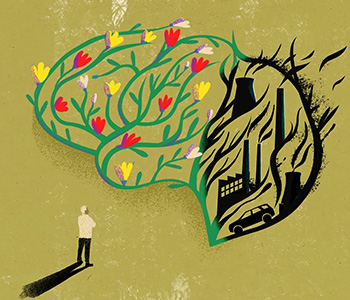
What the Air You Breathe May Be Doing to Your Brain
For years, the two patients had come to the Penn Memory Center at the University of Pennsylvania, where doctors and researchers follow people with cognitive impairment as they age, as well as a group with normal cognition. Both patients, a man and a woman, had agreed to donate their brains after they died for further research. “An amazing gift,” said Dr. Edward Lee, the neuropathologist who directs the brain bank at the university’s Perelman School of Medicine.
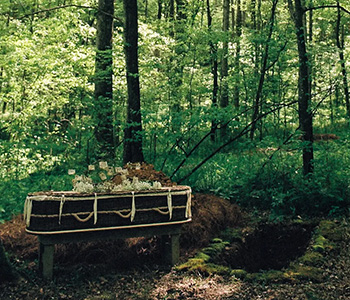
When I Go, I’m Going Green
Our annual family vacation on Cape Cod included all the familiar summer pleasures: climbing dunes, walking beaches, spotting seals, eating oysters, reading books we had intended to get to all year.
And a little shopping. My grandkid wanted a few small toys. My daughter stocked up on thousand-piece jigsaw puzzles at the game store in Provincetown. I bought a pair of earrings and a couple of paperbacks.
Health Risks From Cannabis May Grow as Users Age

Dr. Benjamin Han, a geriatrician and addiction medicine specialist at the University of California, San Diego, tells his students a cautionary tale about a 76-year-old patient who, like many older people, struggled with insomnia.“She had problems falling asleep, and she’d wake up in the middle of the night,” he said. “So her daughter brought her some sleep gummies” — edible cannabis candies.
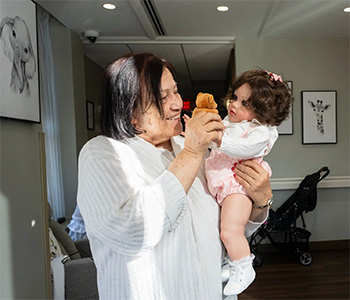
These Settings Aren’t Real. But for Dementia Patients, What Is?
The nursery at RiverSpring Residences in the Bronx is a sunny, inviting space outfitted with a bassinet, a crib with a musical mobile, a few toys, bottles, picture books for bedtime reading and a rack of clothing in tiny sizes.The other morning, Wilma Rosa was there trying to soothe one of its cranky, small charges. “What’s the matter, baby?” she crooned, patting the complainer’s back. “You OK? I want you to go to sleep for a little while.”
When They Don’t Recognize You Anymore
It happened more than a decade ago, but the moment remains with her.
Sara Stewart was talking at the dining room table with her mother, Barbara Cole, 86, in Bar Harbor, Maine. Ms. Stewart, then 59, a lawyer, was making one of her extended visits from out of state.
Two or three years earlier, Ms. Cole had begun showing troubling signs of dementia, probably from a series of small strokes. “I didn’t want to yank her out of her home,” Ms. Stewart said.